Featured
Table of Contents
Integration requirements vary widely, cost structures are complex, and it's hard to predict which CMS offerings will stay viable long-term. Faced with a digital landscape that's moving extremely quickly, you require to rely on not only that your supplier can equal what's present, however also that their service truly aligns with your special service needs and audience expectations.
Discover insights on what to consider when picking a CMS for your business.
A beneficiary is qualified to get services under the GUIDE Model if they fulfill the following criteria: Has dementia, as verified by attestation from a clinician on the GUIDE Individual's GUIDE Professional Roster; Is registered in Medicare Parts A and B (not registered in Medicare Advantage, including Unique Needs Strategies, or speed programs) and has Medicare as their main payer; Has not chosen the Medicare hospice benefit, and; Is not a long-lasting nursing home homeowner.
The table below shows a description of the five tiers. GUIDE Individuals will report information on disease phase and caretaker status to CMS when a recipient is first lined up to a participant in the model. To guarantee consistent recipient task to tiers throughout model individuals, GUIDE Participants need to utilize a tool from a set of authorized screening and measurement tools to measure dementia phase and caretaker concern.
GUIDE Individuals should inform beneficiaries about the design and the services that recipients can receive through the design, and they must record that a beneficiary or their legal representative, if applicable, authorizations to receiving services from them. GUIDE Individuals need to then submit the consenting recipient's details to CMS and, within 15 days, CMS will validate whether the recipient satisfies the model eligibility requirements before lining up the recipient to the GUIDE Participant.
Future-Proofing Modern System Solutions in 2026
For an individual with Medicare to receive services under the model, they need to satisfy specific eligibility requirements. They will also need to find a healthcare service provider that is taking part in the GUIDE Design in their neighborhood. CMS will release a list of GUIDE Individuals on the GUIDE website in Summertime 2024.
For instant aid, please discover the list below resources: and . You may likewise contact 1-800-MEDICARE for specific info on questions regarding Medicare benefits. For the purposes of the GUIDE Design, a caregiver is specified as a relative, or unsettled nonrelative, who assists the beneficiary with activities of everyday living and/or critical activities of everyday living.
People with Medicare must have dementia to be qualified for voluntary positioning to a GUIDE Participant and may be at any stage of dementiamild, moderate, or extreme. When a person with Medicare is first examined for the GUIDE Model, CMS will depend on clinician attestation instead of the existence of ICD-10 dementia diagnosis codes on previous Medicare claims.
They might testify that they have actually gotten a written report of a documented dementia diagnosis from another Medicare-enrolled specialist. As soon as a recipient is willingly lined up to a GUIDE Individual, the GUIDE Individual need to connect an eligible ICD-10 dementia medical diagnosis code to each Dementia Care Management Payment (DCMP) regular monthly claim in order for it to be paid by CMS.The approved screening tools include two tools to report dementia phase the Scientific Dementia Ranking (CDR) or the Practical Evaluation Screening Tool (QUICK) and one tool to report caretaker stress, the Zarit Concern Interview (ZBI).
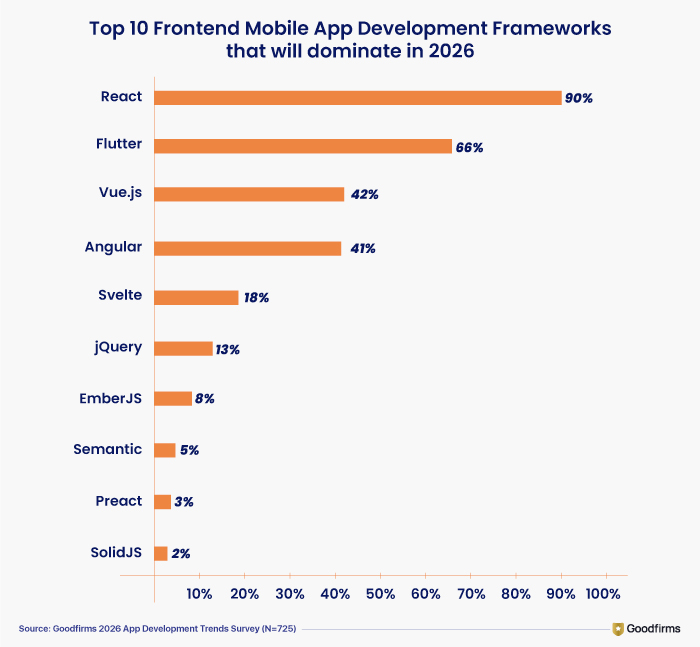
Key Development Frameworks to Consider During 2026
GUIDE Participants have the option to look for CMS approval to use an alternative screening tool by sending the proposed tool, together with released evidence that it stands and reputable and a crosswalk for how it corresponds to the model's tiering limits. CMS has complete discretion on whether it will accept the proposed alternative tool.
The GUIDE Design needs Care Navigators to be trained to deal with caretakers in determining and managing common behavioral changes due to dementia. GUIDE Individuals will likewise assess the recipient's behavioral health as part of the thorough assessment and provide recipients and their caregivers with 24/7 access to a care employee or helpline.
An aligned beneficiary would be deemed disqualified if they no longer fulfill one or more of the recipient eligibility requirements. This could occur, for instance, if the recipient ends up being a long-term retirement home local, registers in Medicare Advantage, or stops getting the GUIDE care delivery services from the GUIDE Individual (e.g., due to the fact that they move out of the program service location, no longer desire to be lined up to the GUIDE Participant, or can not be contacted/are lost to follow-up). The GUIDE Model is not a total cost of care model and does not have requirements around particular drug treatments.
GUIDE Participants will be enabled to modify their service area throughout the period of the Model. The GUIDE Individual will recognize the recipient's primary caretaker and evaluate the caregiver's knowledge, needs, well-being, tension level, and other challenges, consisting of reporting caretaker stress to CMS utilizing the Zarit Burden Interview.
The GUIDE Model is not a shared cost savings or overall expense of care model, it is a condition-specific longitudinal care design. In general, GUIDE Design individuals will be paid a month-to-month dementia care management payment (DCMP) for each recipient. The GUIDE Model is created to be suitable with other CMS accountable care models and programs (e.g., ACOs and advanced main care designs) that supply health care entities with opportunities to enhance care and decrease costs.
Navigating the Future Landscape Behind GEO
DCMP rates will be geographically changed as well as a Performance Based Change (PBA) to incentivize premium care. The GUIDE Model will also pay for a specified quantity of reprieve services for a subset of design beneficiaries. Design individuals will utilize a set of brand-new G-codes created for the GUIDE Model to submit claims for the regular monthly DCMP and the reprieve codes.
Respite services will be paid up to a yearly cap of $2,500 per beneficiary and will differ in system costs based on the kind of respite service used. Yes, the regular monthly rates by tier are readily available listed below.(New Patient Payment Rate)$150$275$360$230$390(Developed Client Payment Rate)$65$120$220$120$215GUIDE Individuals are accountable for paying Partner Organizations for GUIDE care delivery services that the Partner Company provides to the GUIDE Individual's lined up beneficiaries.
GUIDE Participants and Partner Organizations will figure out a payment arrangement and GUIDE Individuals should have contracts in location with their Partner Organizations to reflect this payment plan. GUIDE Individuals will also be expected to keep a list of Partner Organizations ("Partner Company Roster") and update it as changes are made throughout the course of the GUIDE Model.

Latest Posts
Choosing a Right CMS for Scaling Success
Optimizing Your Sales Ecosystem for 2026
How Automated Development Change Frameworks in 2026?